

By Kawther Abuelgasim Obeid Sharfi
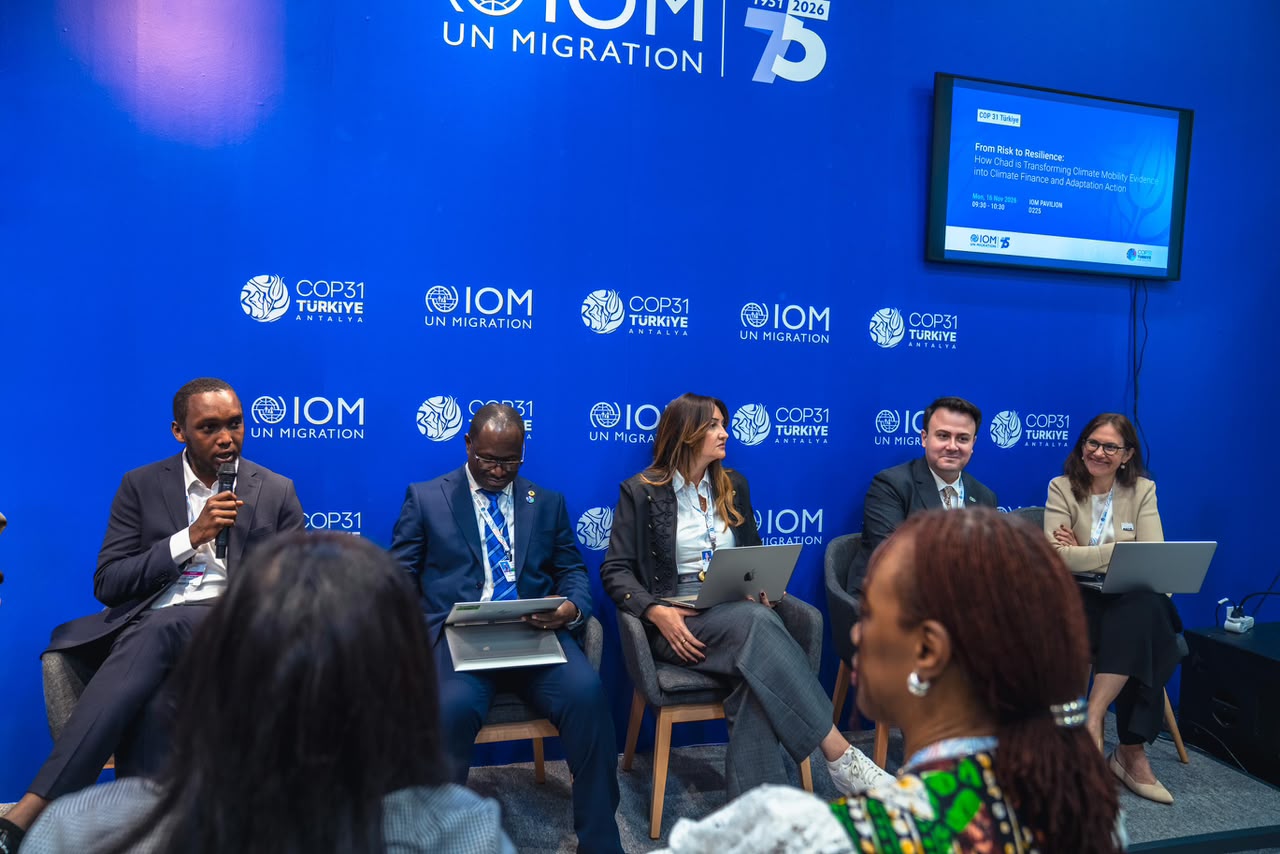
On the sidelines of COP31 in Antalya, Chad’s Director for Climate Change, representing the Minister of the Environment, Fisheries and Sustainable Development, took part in a meeting on climate mobility. Chad’s experience and initiatives were highlighted, notably the Climate Mobility Investment Plan (CMIP), which aims to structure interventions and mobilize the resources needed to respond to population displacement caused by climate change.
The panel brought together figures and representatives of international institutions engaged on climate issues, including the Deputy Director General of the International Organization for Migration (IOM), a representative of the Sahara and Sahel Observatory, a representative of the Green Climate Fund (GCF), a representative of AGRHYMET, and the Country Engagement Director of the NDC Partnership.
Discussions focused in particular on developing the Risk Index for Climate Displacement (RICD), a strategic tool designed to identify the areas most exposed to displacement risks from floods, droughts and other climate events. The instrument will help anticipate territorial vulnerabilities, guide investments, and better target prevention and community resilience efforts. For example, identifying areas highly exposed to flooding will make it possible to direct investment toward protective infrastructure and resilient livelihoods.
Through these initiatives, Chad aims to move from responding to displacement after disasters to a more anticipatory approach built on data, planning and targeted investment. This approach is in line with national adaptation priorities and the implementation of NDC 3.0, with the ambition of making climate mobility a major pillar of resilience and sustainable development policies, while strengthening partnerships with international actors.