
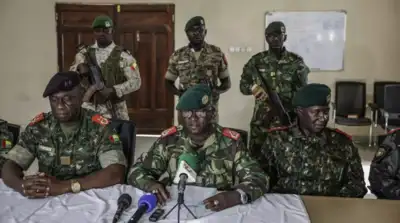

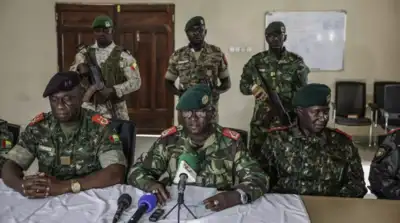
Bissau — Guinea-Bissau slid into political chaos on November 26, after military officers announced they had seized power, just days before the release of election results.
Gunfire echoed near the presidential palace around midday. Soon after, officers calling themselves the “High Military Command for the Restoration of Order” said they had taken control of the country “until further notice” and shut nationwide borders.
Military Scraps Elections and Silences Media
Speaking at army headquarters, General Denis N’Canha, head of the presidential military household, declared an immediate suspension of the electoral process. As a result, authorities effectively annulled the presidential and legislative elections held on Sunday.
At the same time, the military ordered media outlets to halt regular programming, tightening its grip on information as uncertainty spread across the capital.
After hours of silence, President Umaro Sissoco Embaló confirmed his arrest. In a brief phone call to France 24, he said officers had overthrown him and were holding him at army headquarters.
“I cannot speak much,” he said, fearing reprisals if he did.
Regional Fears and International Pressure
The crisis unfolded on the eve of official election results, which electoral authorities were due to announce on Thursday. Both Embaló and his main rival had already claimed victory, raising tensions even before the military’s intervention.
Portugal, Guinea-Bissau’s former colonial ruler, quickly reacted. Lisbon urged restraint and called for a return to constitutional rule. It also demanded the completion of vote counting and the publication of results.
For now, the country’s fragile democracy hangs in the balance, as soldiers tighten their control and the region braces for yet another test of stability.
(Manara Radio Television)
