
By Djinodji SOLMENGAR

Ali Khamenei, Iran’s Supreme Leader since 1989, has died at 86, Iranian authorities confirmed. His death brings to a close more than three decades at the helm of the Islamic Republic.
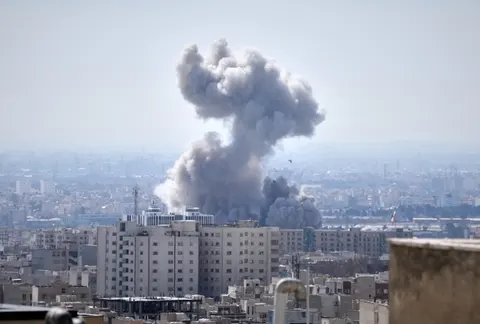
He held ultimate authority over the armed forces, the judiciary and key state institutions.

Born in 1939 in Mashhad, Khamenei rose through the ranks during the 1979 Islamic Revolution. He backed Ayatollah Ruhollah Khomeini and later took over as Supreme Leader after Khomeini’s death in 1989. Before that, he served as president from 1981 to 1989.

During his rule, he tightened clerical control and built up the influence of the Islamic Revolutionary Guard Corps. He pushed back against the United States and Israel and doubled down on Iran’s regional strategy.

His tenure saw economic sanctions, regional tensions and repeated waves of domestic unrest, including the 2009 Green Movement and the 2022 protests after Mahsa Amini’s death.

Supporters saw him as a guardian of the Islamic Revolution and a defender of national sovereignty. Critics accused him of cracking down on dissent and restricting political freedoms.

Khamenei stood among the Middle East’s longest-serving leaders and shaped Iran’s direction for more than 30 years.

Iran has appointed Ayatollah Alireza Arafi, a senior cleric and longtime insider as interim Supreme Leader.

Djinodji Solmengar

Djinodji Solmengar Rodrigue is a journalist with MRTV English, Chad’s first English-language media outlet, where he led English-language news coverage at its launch. Based in N’Djamena, his reporting explores political, economic, and social developments, with particular attention to everyday realities, informal sectors, and cultural life. His work also extends to football and broader societal issues, approached through field reporting and in-depth storytelling. Beyond reporting, Djinodji regularly conducts interviews focused on education, including the teaching of English in Chad, as well as conversations (with AFROTRONIX, to name a few) on culture and music. He is also active as an English–French interpreter, working alongside international media professionals. In this capacity, he recently supported and interpreted for a delegation of foreign journalists, including BBC representatives, during the PND Chad Connexion 2030 mission. Alongside his professional practice, Djinodji is pursuing a PhD, with research centered on the presence of China and Russia in Africa as portrayed in selected Commonwealth online media. His academic interests lie at the intersection of media, geopolitics, and discourse analysis. Earlier in his career, he taught English and authored a Master’s thesis examining the contextualization of English language teaching in Chad, reflecting a sustained engagement with educational challenges and policy.