

By Djinodji SOLMENGAR Rodrigue
The Government of Japan has provided 200 million Japanese yen, worth about 1.3 million US dollars or CFA 706 million, to support school meals and nutrition programmes in Chad.
The United Nations World Food Programme (WFP) announced the contribution in a report published on September 8, 2026.
The funding will support communities affected by food insecurity and humanitarian crises.
16,400 schoolchildren to receive meals
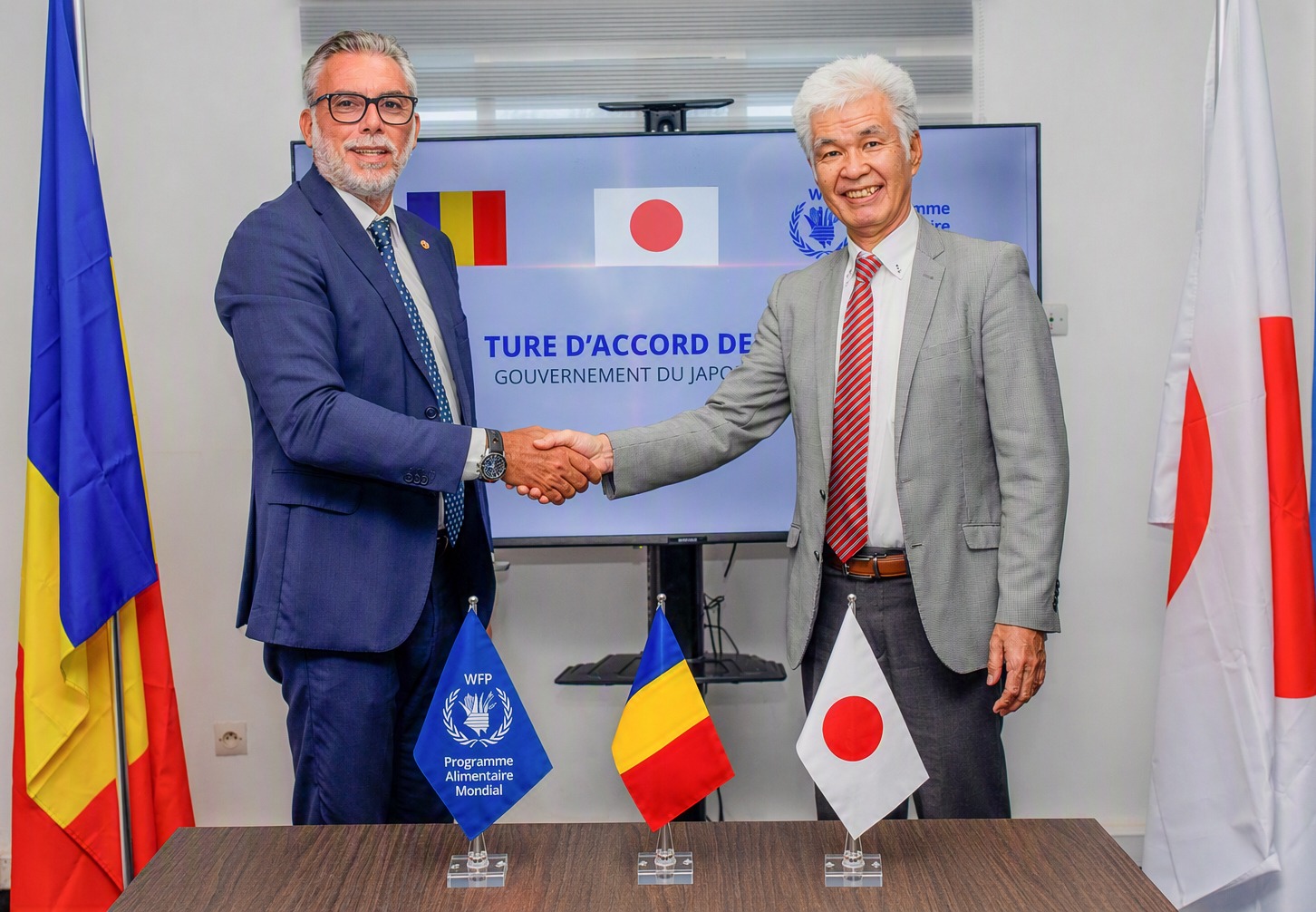
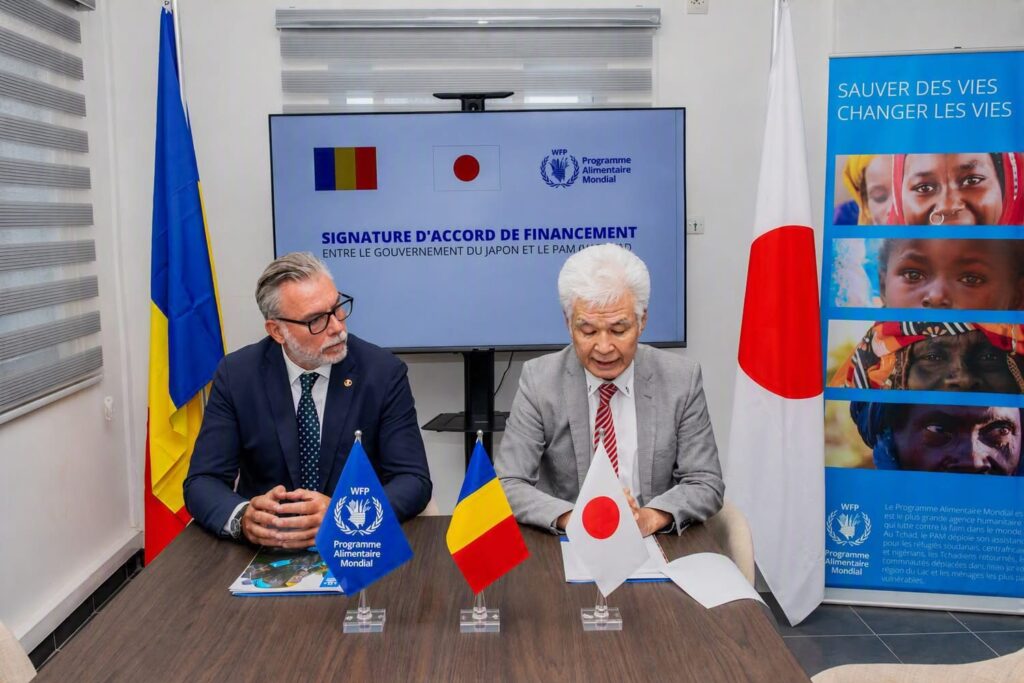
The agreement was signed in N’Djamena by Kentaro Minami, Japan’s Ambassador to Chad, and Jean-Noël Gentile, WFP Representative and Country Director in Chad.
The contribution will help the WFP buy 333 tonnes of food. It will reach about 23,000 people, according to the organisation.
Around 16,400 schoolchildren will receive school meals for six months during the 2026-2027 school year.
The programme aims to improve children’s nutrition. It also seeks to support school attendance and retention, especially among girls.
The funding will also help the WFP provide malnutrition prevention services to 6,700 children under five. Pregnant and breastfeeding women will also receive support.
Japan’s ambassador said the contribution reflects his government’s commitment to children’s education and the fight against malnutrition in Chad.
Chad faces major food and humanitarian needs
The Japanese contribution comes as food insecurity continues to affect millions of people in Chad.
WFP data cited in the report shows that 3.5 million people face severe food insecurity in the country.
The organisation also estimates that 2 million children under five suffer from acute malnutrition.
Chad also hosts about 1.5 million refugees. Nearly 945,000 people have arrived from Sudan since the conflict began in April 2023.
The WFP estimates that it needs about 85 million US dollars to maintain its operations in Chad from September 2026 to February 2027.
The organisation aims to assist up to 3.7 million people each year.
The WFP says school meals and nutrition programmes can help protect children’s health and support their access to education. They can also help strengthen the resilience of vulnerable communities over the long term.
